

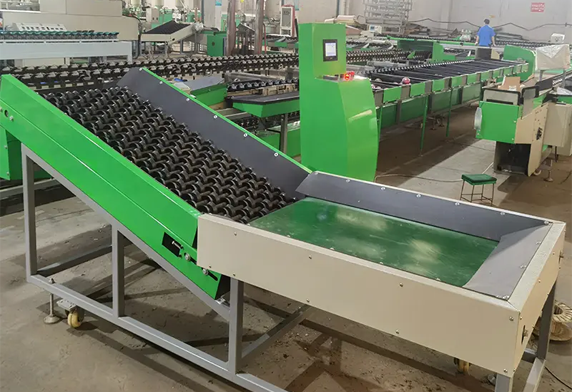
A reliable EPE machine for export packaging applications is one of the most important production systems for manufacturers that need high-performance cushioning, protection, and lightweight packaging for international shipping. As global trade continues to expand, businesses increasingly require packaging materials that can protect products from impact, vibration, moisture, and handling damage during long-distance transport. EPE, also known as expanded polyethylene, has become a preferred packaging material because it is durable, flexible, shock-absorbing, and cost-effective.
This page provides SEO-friendly, industry-focused information about the EPE machine used in export packaging, including definitions, working principles, common applications, advantages, technical specifications, product features, and procurement considerations. The content below is designed for use in blog posts, category pages, industrial directories, and manufacturing service pages. It contains only general industry information and does not include specific company recommendations.
An EPE machine is a manufacturing machine used to produce expanded polyethylene foam products. EPE foam is created through a physical foaming process that transforms polyethylene resin into a lightweight, closed-cell material with excellent cushioning properties. The resulting material is widely used in export packaging, industrial protection, electronics packaging, furniture protection, glass transport, ceramics packaging, and many other applications where product safety is essential.
In export packaging, EPE foam is especially valued because it combines shock resistance, moisture resistance, light weight, and reusability. A reliable EPE machine allows manufacturers to produce foam sheets, rolls, nets, profiles, corner protectors, and custom packaging components in large volumes with stable quality.
The term reliable EPE machine usually refers to equipment that performs consistently, maintains stable output, supports continuous production, and delivers foam products with uniform density, thickness, and appearance. For export packaging applications, reliability is critical because product quality must meet demanding shipping standards and international customer expectations.
Export packaging must protect goods across long shipping routes, multiple handling stages, warehouse storage, and changing environmental conditions. EPE foam has become a standard material in this field because it offers a strong balance of performance and cost.
These advantages make EPE foam highly suitable for export packaging applications such as precision instruments, electronic products, furniture, glassware, medical equipment, cosmetics, hardware, and industrial components.
A reliable EPE machine typically operates through a controlled foam extrusion process. Raw polyethylene materials are mixed with foaming agents and auxiliary additives, then heated, melted, and extruded through a die to create expanded foam. The output is then cooled, shaped, and collected for further processing.
While machine configurations can vary, the basic production process usually includes the following stages:
The reliability of the EPE machine depends on the stability of temperature control, screw performance, output consistency, electrical safety, and the precision of the production line. For export packaging, repeatable quality is essential because packaging materials must deliver dependable protection across high-volume shipments.
A high-quality EPE machine should support efficient, stable, and flexible production. The following features are commonly expected in modern export packaging production systems.
| Feature | Function | Benefit for Export Packaging |
|---|---|---|
| Stable temperature control | Maintains uniform heating during extrusion | Improves foam consistency and reduces defects |
| High output capacity | Supports continuous large-scale production | Meets bulk export packaging demand |
| Adjustable thickness settings | Allows production of different foam thicknesses | Supports various product protection needs |
| Uniform foaming structure | Ensures even cell distribution | Improves cushioning performance |
| Energy-efficient operation | Reduces power consumption | Lowers production cost |
| Easy operation and maintenance | Simplifies daily use and servicing | Minimizes downtime and labor costs |
| Compatible with downstream processing | Supports cutting, laminating, and winding | Increases packaging product variety |
A reliable EPE machine can produce multiple types of foam packaging products. Each format serves a different protective purpose in export logistics and industrial packaging.
| EPE Product Type | Description | Typical Export Packaging Use |
|---|---|---|
| EPE foam sheet | Flat expanded polyethylene foam sheet in various thicknesses | Surface protection, interleaving, cushioning |
| EPE foam roll | Continuous rolled foam material for flexible cutting | Wrapping, filling, general protective packaging |
| EPE foam net | Lightweight foam net sleeve for irregular shapes | Fruit, bottle, glass, ceramic, and delicate product protection |
| EPE profile | Custom-shaped foam section for edges and corners | Furniture, panels, appliances, and frame protection |
| EPE corner protector | Foam protector designed for corners and edges | Furniture, boards, and boxed goods during shipping |
| EPE laminated packaging material | Foam combined with film, foil, or other layers | Special protection, insulation, and stronger packaging structure |
Export packaging requires materials that protect products while keeping logistics efficient. The output of a reliable EPE machine delivers several important advantages.
EPE foam absorbs impact effectively, making it suitable for fragile or high-value products. Its cushioning performance helps reduce breakage, deformation, and surface scratches.
EPE packaging adds minimal weight, which is important in export shipping where freight costs can be strongly influenced by package weight.
The closed-cell structure helps EPE resist moisture, making it useful for goods that may encounter humidity during sea freight or warehouse storage.
EPE output can be processed into many packaging formats, allowing manufacturers to support multiple industries and customer requirements.
Compared with many alternative packaging materials, EPE offers a balance of quality and affordability. A reliable machine helps control waste and improve productivity.
EPE foam can often be reused in secondary packaging applications. In many operations, it supports more efficient material use and lower packaging waste.
For export goods, packaging appearance matters. EPE foam has a neat, professional look that supports product presentation and customer confidence.
EPE machine output is widely used in many export packaging segments. The following industries commonly rely on EPE foam for protection during transportation and storage.
| Industry | Typical EPE Packaging Use | Why EPE Is Suitable |
|---|---|---|
| Electronics | Inner cushioning, component protection, product inserts | Shock absorption and anti-scratch protection |
| Furniture | Edge guards, corner protectors, surface wrapping | Protects large and heavy items from shipping damage |
| Glass and ceramics | Net sleeves, sheet padding, partition materials | Reduces breakage and impact risk |
| Appliances | Profiling foam, support blocks, protective inserts | Supports structural stability during transit |
| Precision instruments | Custom-cut foam inserts, anti-vibration padding | Provides controlled cushioning for sensitive equipment |
| Medical devices | Clean protective packaging, transport inserts | Lightweight, hygienic, and protective |
| Hardware and tools | Product separation, buffer layers, packaging support | Prevents movement and surface damage |
| Food-related export items | Protective outer packaging and buffering | Provides lightweight handling support |
Businesses looking for a reliable EPE machine for export packaging applications should evaluate technical specifications carefully. The right configuration depends on production volume, product type, and packaging market requirements.
| Specification | What It Means | Why It Matters |
|---|---|---|
| Production capacity | Maximum output per hour or per day | Determines suitability for small, medium, or large-scale operations |
| Foam density range | Available product density settings | Affects cushioning strength and material usage |
| Product thickness range | Minimum and maximum foam thickness | Supports different export packaging designs |
| Screw diameter | Main extrusion screw size | Influences melting, mixing, and output stability |
| Heating system | Electric or other heat control method | Impacts energy efficiency and temperature precision |
| Cooling system | Method used to stabilize foam after extrusion | Ensures product shape and quality consistency |
| Automation level | Degree of manual vs automatic control | Improves efficiency, reduces labor, and increases repeatability |
| Control system | Operation interface and monitoring tools | Helps operators manage production settings accurately |
| Machine footprint | Floor space required for installation | Important for factory layout and capacity planning |
| Maintenance accessibility | Ease of cleaning, servicing, and part replacement | Reduces downtime and supports long-term reliability |
When packaging goods for export, product damage can lead to financial losses, customer complaints, delayed shipments, and reduced brand reputation. For that reason, machine reliability is not just a manufacturing benefit; it is a business requirement.
A reliable EPE machine helps ensure:
In export markets, even minor packaging failures can become major logistics problems. Reliable EPE machine performance supports the supply chain by producing protective packaging that performs consistently under demanding shipping conditions.
EPE foam produced by a dependable machine offers several measurable performance benefits in export packaging environments.
| Performance Area | EPE Foam Benefit | Export Packaging Result |
|---|---|---|
| Compression resistance | Resists crushing under load | Maintains protection during stacking and transit |
| Shock absorption | Reduces force transfer from impact | Protects fragile goods from breakage |
| Flexibility | Can be shaped for different products | Supports customized packaging design |
| Moisture resistance | Limits absorption of water and humidity | Improves performance in long-distance shipping |
| Lightweight structure | Adds protection without heavy mass | Helps reduce freight and handling burden |
| Thermal insulation | Offers moderate insulation properties | Useful for temperature-sensitive packaging needs |
Selecting the right EPE machine for export packaging applications requires a detailed review of production goals and quality expectations. The following points are commonly used to evaluate equipment suitability.
Consider the amount of foam material needed each day, the number of packaging orders to support, and whether the machine must run continuously for long shifts.
Determine whether the machine must produce only sheets, or whether it should also support rolls, profiles, nets, and laminated products.
Check whether the equipment can maintain even density, accurate thickness, and uniform foam cell structure over time.
A reliable machine should be easy to learn, easy to adjust, and easy to maintain for factory operators.
Export packaging production depends on stable machine performance. Durable components help reduce replacement costs and downtime.
Efficient heating and extrusion systems can reduce production cost and improve overall operational value.
The demand for EPE machine output continues to grow because international shipping volumes remain high and product protection standards continue to rise. Export packaging buyers increasingly want materials that combine performance, cost control, and adaptability.
EPE foam meets these needs by offering a dependable solution for products that must travel across borders, through ports, and into large distribution networks. As more companies focus on safe delivery, efficient logistics, and damage reduction, the importance of reliable EPE machine production continues to increase.
Export-oriented factories often choose EPE foam because it can be produced in large quantities while keeping packaging quality consistent. This makes it a practical choice for manufacturers serving global markets in electronics, consumer goods, industrial equipment, and fragile merchandise.
The following keyword themes are commonly associated with this topic and may help improve topical relevance for search engines when used naturally in page content:
For SEO purposes, it is useful to keep keyword usage natural and relevant while maintaining clear headings, structured tables, and readable paragraphs. Search engines often favor pages that satisfy user intent with organized, original, industry-specific information.
| Term | Meaning |
|---|---|
| EPE | Expanded polyethylene, a lightweight foam packaging material |
| Foaming extrusion | The process of expanding and shaping polyethylene into foam |
| Density | The amount of material per unit volume; affects strength and cushioning |
| Closed-cell structure | A foam structure with sealed cells that improve resilience and moisture resistance |
| Foam sheet | A flat EPE product used for wrapping or interleaving |
| Foam profile | A shaped foam section used for edge and corner protection |
| Laminated foam | EPE foam combined with other layers for added function or strength |
A reliable EPE machine for export packaging applications is an essential asset for manufacturers that need stable, efficient, and high-quality foam production. EPE foam is widely used because it provides excellent cushioning, lightweight protection, moisture resistance, and flexible processing options. For export packaging businesses, machine reliability directly affects product quality, production efficiency, and customer satisfaction.
Whether producing foam sheets, rolls, profiles, nets, or custom protective components, a dependable EPE machine supports consistent output and helps manufacturers meet the demands of global shipping. By focusing on performance, durability, energy efficiency, and production stability, businesses can build a stronger packaging operation that serves international markets effectively.
If your goal is to create an SEO-friendly industry page, blog article, or product category introduction, this topic provides strong search relevance because it combines packaging protection, industrial machinery, export logistics, and foam manufacturing into one high-intent subject.
```
Téléphone:+86 15253598306
E-mail:sales@fushijixie.cn
Adresse:Zone industrielle de Langao, ville de Longkou, province du Shandong, 265709, Chine


Droits d'auteur © Longkou Fushi Packing Machinery Co., LTD. Tous droits réservés. Plan du site
Ce site Web utilise des cookies pour vous garantir la meilleure expérience sur notre site Web.

 English
 Español
 Portugues
 Pусский
 العربية
 Türk dili
 Indonesia
 Tiếng Việt
 فارسی



 Téléphone
Commentaire
(0)